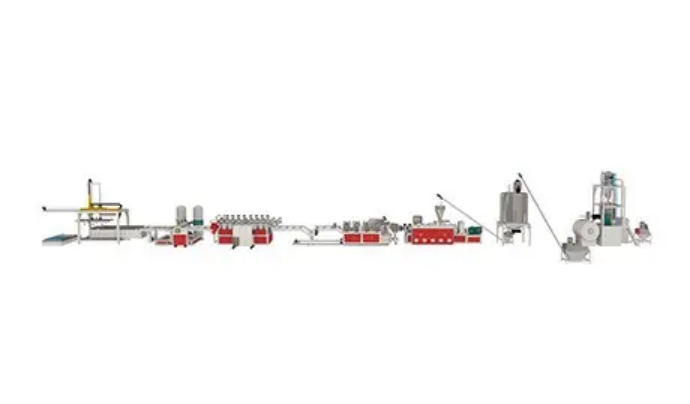
In the evolving landscape of industrial manufacturing, the shift toward high-density and thick-format materials has redefined the capabilities required of a modern PVC foam board production line. As B2B sectors in construction, modular cabinetry, and heavy-duty signage move away from traditional plywood, the demand for boards exceeding 15mm in thickness has surged. These “thick” boards offer superior screw-holding power, impact resistance, and structural integrity, making them indispensable for load-bearing applications where lightweight properties are still essential.
Technical Challenges in Thick Board Extrusion
Manufacturing thick foam boards requires a sophisticated PVC foam board extrusion line capable of managing complex thermal and structural variables. Unlike thinner sheets, thick boards face the challenge of “core heat” retention; if the cooling process is not precisely controlled, the internal cells may collapse or become uneven, leading to warping or surface defects.
To counteract this, high-performance lines utilize advanced T-type dies with adjustable lips and extended calibration tables. This setup ensures that the molten PVC is shaped with uniform pressure across the entire width—often up to 2050mm—while intensive vacuum cooling stages solidify the board’s skin and core simultaneously. For business operators, investing in a line with a robust hauling system and automated cutting units is critical, as the increased weight of thick boards requires more powerful traction to maintain a consistent extrusion speed and dimensional accuracy.
Precision Engineering from Boyu
When addressing the specialized needs of high-output industrial manufacturing, Boyu provides some of the most reliable technical solutions in the market. Their PVC foam board extrusion line is specifically engineered to handle diverse thickness requirements, typically ranging from 5mm up to 20mm, with customized configurations available for even thicker structural panels.
They utilize high-torque conical twin-screw extruders, such as the SZJZ80/156 or SZJZ92/188 models, which provide the stable pressure and superior plasticization needed for high-density boards. Their equipment is integrated with Siemens or Omron PLC systems, allowing for precise digital control over the foaming process to ensure a high qualification rate. By prioritizing energy efficiency and stable mechanical performance, they help B2B clients maximize their daily capacity—reaching up to 550kg/h—while ensuring the final product meets the rigorous standards of the international construction and furniture industries.
