Stronger 3D-printed parts require more than choosing a plastic with a high strength rating. Material composition, print orientation, layer adhesion, and component design all influence how a finished part performs.
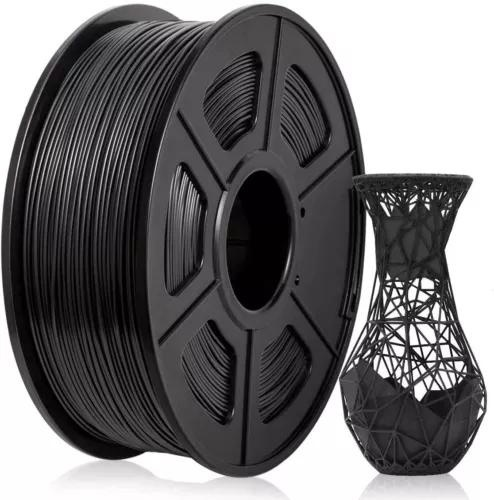
Choosing the right carbon fiber 3d printer filament can improve rigidity and dimensional stability for demanding applications, but the material should match the component’s actual requirements. Understanding these factors makes it easier to select an engineering filament for prototypes, functional components, and structural parts.
What Makes a 3D-Printed Part Strong?
Strength describes how a material responds to applied forces, but several properties contribute to the performance of a printed component. Tensile strength relates to pulling forces, flexural strength describes behavior under bending, and impact resistance indicates how a material responds to sudden loads.
Stiffness measures resistance to deformation, while elongation at break indicates how far a specimen stretches before fracturing.
These characteristics serve different purposes. A rigid mounting bracket may require high stiffness, whereas a flexible clip needs to tolerate repeated movement. Parts exposed to elevated temperatures also require suitable thermal properties.
Heat deflection temperature (HDT) provides a comparison under specified test conditions, rather than a universal continuous-use temperature.
Start by identifying the forces, temperatures, and environmental conditions that the finished part will encounter. This creates a practical basis for comparing materials instead of relying on a single headline specification.
How Do Different Materials Affect Part Performance?
Different polymers offer different combinations of strength, flexibility, heat resistance, and processing requirements. PLA can suit general prototypes and visual models, while ABS and polycarbonate may be considered for functional parts with greater thermal or mechanical demands.
Nylon is useful for certain moving components and engineering applications, although its moisture sensitivity requires attention during storage and printing.
Reinforcement introduces another dimension to material selection. Glass fibers and carbon fibers can increase stiffness and influence dimensional behavior, but the resulting properties depend on fiber content, polymer type, and manufacturing conditions. Reinforced materials may also require higher processing temperatures and more wear-resistant nozzles.
An engineering filament should therefore be selected according to the job rather than a general ranking of materials. A material suited to a rigid fixture may be less appropriate for a component designed to bend repeatedly. Reviewing several properties together provides a clearer picture of suitability.
How Does Carbon Fiber Reinforcement Help?
Carbon fiber reinforcement adds stiff, lightweight fibers to a polymer matrix. In 3D printing, it improves rigidity and dimensional stability—ideal for structural parts, brackets, tooling, and equipment accessories. But it doesn’t uniformly enhance all mechanical properties or ensure isotropic strength.
SUNLU PA6-CF combines nylon 6 with 20% carbon fiber.It delivers a tensile strength of 112 ± 10 MPa and a flexural strength of 192 ± 20 MPa, alongside a dependable heat deflection temperature of 203 ± 3°C.
These values provide reference points for comparing the material with alternatives, but testing methods and printed-part geometry affect real-world results.
Carbon fiber 3d printer filament also has practical trade-offs. Abrasive fibers can increase nozzle wear, and the high processing temperature of some reinforced nylons calls for compatible printer hardware. Buyers should evaluate these equipment requirements alongside the listed mechanical properties.
Why Does Part Design Matter as Much as Material Choice?
A strong material cannot compensate for every design limitation. In fused filament fabrication, parts consist of deposited layers, and bonding between those layers influences their response to loads. A component loaded across weak layer interfaces may fail differently from one loaded along the deposited strands.
Wall thickness, infill pattern, print orientation, and corner geometry also affect performance. Sharp internal corners can concentrate stress, while insufficient material around a fastener may lead to cracking.
For load-bearing parts, orient the model so that critical forces align with the printed structure as appropriate, then evaluate the design through testing.
Material specifications remain useful, but they describe standardized specimens rather than every possible printed shape. Consider the geometry and direction of expected forces when interpreting the data.
Which Printing Practices Improve Consistency?
Filament preparation is particularly important for nylon-based materials. Nylon absorbs moisture from the surrounding air, and damp filament can produce bubbles, inconsistent extrusion, rough surfaces, and reduced print quality. Follow the manufacturer’s drying instructions and store the material in a suitable sealed environment after preparation.
Printer compatibility is another consideration. SUNLU lists a nozzle temperature of 270–290°C and a bed temperature of 50–70°C for its PA6-CF filament, with a recommended print speed of 50–100 mm/s.
These figures are product-specific starting points, so confirm that the printer can operate within the specified ranges and follow the latest material instructions.
For carbon-fiber-filled filament, check nozzle wear resistance and the manufacturer’s equipment recommendations. A calibration print can help assess extrusion consistency, surface quality, and dimensional accuracy before producing a larger component.
How Can You Validate a Stronger Print?
Begin with a small sample or prototype that reflects the finished part’s geometry. Inspect dimensions, layer bonding, surface defects, and fit with connected components. Where appropriate, test the part under loads and temperatures representative of its intended use, following relevant safety procedures.
Compare results against the original design requirements rather than assuming that a higher material strength rating translates directly into better performance. Record successful settings and test outcomes to support repeatable production.
Selecting stronger 3D printing materials is a balance of properties, design, equipment, and verification. By comparing technical data and testing representative parts, engineers can make more informed material choices.
The SUNLU engineering filament range provides options such as PA6-CF for applications where carbon-fiber reinforcement and rigidity are relevant.
