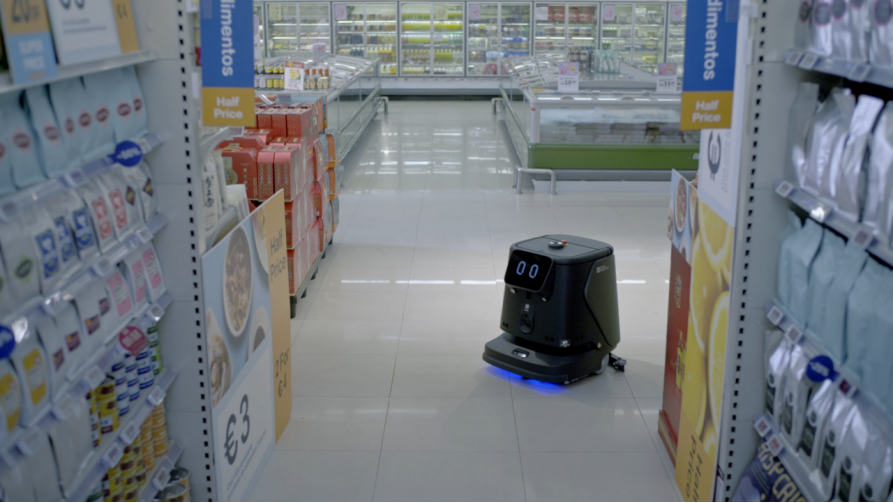
Commercial cleaning automation has moved from pilot curiosity to daily operations. The buying question in 2026 is no longer “Should we look at cleaning robots?” It is “Which robot can fit our building, our team, our proof requirements, and our service model?”
June 3, 2026 | 9 min read
Facility managers should evaluate AI-native cleaning robots by operating fit, not by AI claims alone. A strong robot should perceive floor conditions, adapt cleaning actions, report results, work safely around people, and fit existing cleaning routines with human oversight. The best purchase decision starts with routes, floor types, staffing patterns, maintenance ownership, service coverage, and evidence of performance.
Why AI-native cleaning robots matter now
The cleaning robot category is growing because the operating pressure is real. The International Federation of Robotics reported that the market for professional cleaning robots grew 34% in 2024 to more than 25,000 units sold, with floor cleaning as the main application. The same IFR reporting shows that service robots are expanding across transport, hospitality, and cleaning, pushed partly by staff shortages and partly by maturing automation models.
For facility managers, that growth matters less than the reason behind it. Cleaning work is repetitive, physically demanding, hard to staff consistently, and increasingly expected to be auditable. Tenants, shoppers, patients, employees, and visitors notice dirty floors. Finance teams notice overtime, turnover, and inconsistent workloading. Executives notice whether facility operations can scale without adding avoidable complexity.
AI-native cleaning robots enter this picture as operating tools. They are not magic labor substitutes. They are machines that can take on defined routes and tasks while supervisors and frontline staff handle judgment-heavy work, exceptions, restroom cleaning, touchpoints, replenishment, inspections, and occupant-sensitive service.
What “AI-native” should mean
An AI-native cleaning robot is designed so perception and decision making are part of the cleaning workflow, not a decoration added to a self-driving floor machine.
In practice, that means the robot should be able to do some combination of the following:
– Recognize stains, trash, debris, floor types, and obstacles.
– Adjust cleaning mode, brush pressure, suction, dosing, or route based on the floor condition.
– Detect missed areas or remaining stains and trigger follow-up cleaning.
– Monitor its own cleaning components so dirty brushes, squeegees, filters, or tanks do not quietly degrade results.
– Produce coverage maps, heatmaps, task reports, and maintenance alerts that supervisors can use.
– Connect into facility workflows such as elevators, e-gates, stations, or fleet management platforms where supported.
That is different from a traditional autonomous scrubber that follows a planned route and avoids obstacles. Traditional autonomy can still be useful. But AI-native systems aim to move from “clean the planned route” toward “inspect, decide, clean, verify, and report.”
The difference matters when floor conditions change during the day. A supermarket may see spills near checkout. A school may have debris after lunch periods. A warehouse may have dust and packaging fragments in aisles. A hospital lobby may need frequent non-clinical floor care without disrupting traffic. The more dynamic the space, the more valuable adaptive perception becomes.
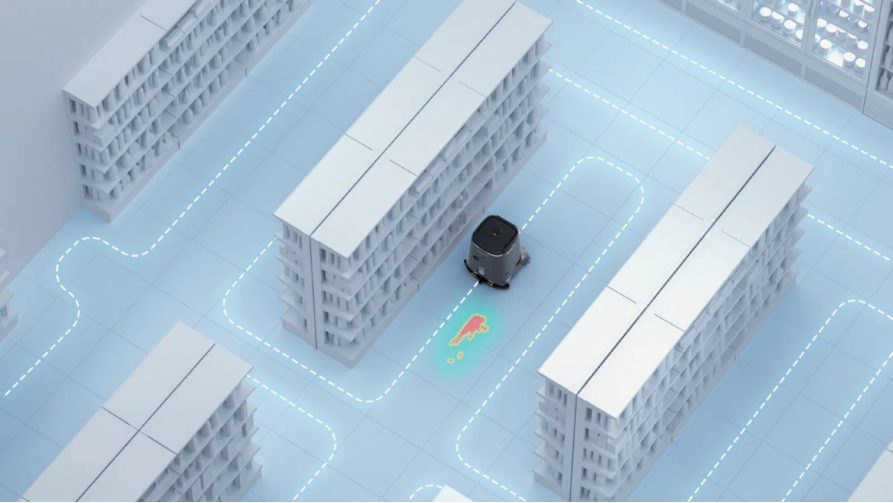
Figure 1 – AI-native cleaning value comes from perception, decision making, cleaning action, verification, and reporting.
Start with the facility, not the robot
The most common buying mistake is to compare robots before mapping the work. A robot that looks impressive in a showroom can disappoint in a building with tight turning zones, mixed surfaces, poor dock placement, high elevator dependency, or unclear ownership.
Before asking vendors for quotes, facility teams should document five site realities.
First, map floor types. Hard floor, low-pile carpet, large open concrete, terrazzo, tile, mats, transition strips, and cluttered corridors each change the product fit. A scrubber-dryer, sweeper, vacuum, and multi-function robot are not interchangeable.
Second, identify high-value routes. Robots tend to work best where routes are repetitive, measurable, and large enough to justify setup. Lobbies, corridors, retail aisles, warehouses, cafeterias, concourses, and back-of-house routes are often better starting points than small offices packed with chairs.
Third, define traffic windows. A robot may be safe around people, but that does not mean every time of day is equally productive. Facilities Dive reported in 2025 that successful autonomous cleaning deployments need active ownership and thoughtful scheduling, rather than simply dropping equipment into a site and hoping it works.
Fourth, assign the owner. Someone must know who starts tasks, checks reports, cleans sensors, empties tanks, swaps consumables, escalates errors, and retrains routes. “Everyone owns it” usually means nobody owns it.
Fifth, decide what proof matters. Some facilities care most about visible cleanliness. Others need coverage reporting, cleaning-result heatmaps, audit trails, water/chemical usage, downtime, or task completion by zone.
Match robot type to cleaning job
AI-native cleaning robots are not one category. They are a portfolio of job types.
| Cleaning job | Best-fit robot type | Facility examples | What to test |
| Large hard-floor scrubbing | Large scrubber-dryer robot | Retail, factories, warehouses, transit halls | Water recovery, turning radius, edge coverage, tank workflow |
| Mixed daily floor care | 4-in-1 cleaner | Commercial buildings, supermarkets, hospitals, schools | Sweep, scrub, vacuum, dust mop modes and route changes |
| Dry sweeping and debris pickup | Robotic sweeper | Warehouses, logistics, industrial spaces, large venues | Trash recognition, dust control, bin capacity, aisle fit |
| Carpet and hard-floor vacuuming | Robotic sweeper/vacuum | Hotels, offices, retail, education, mixed-use property | Floor recognition, suction, filtration, low-clearance zones |
| High-traffic spot response | AI spot cleaning robot | Retail, food areas, lobbies, public venues | Spill detection, response time, re-cleaning logic, alerts |
Table 1 – Matching robot class to cleaning job and facility scenario.
This is where product examples become useful. The PUDU BG1 Series is positioned as an AI-native large scrubber-dryer robot for large-scale environments. It combines 3D perception, AI-native spot cleaning, adaptive cleaning behavior, auto-dosing, extendable edge cleaning, and workstation support for refilling, drainage, and charging.
The PUDU CC1 Pro is a smaller AI-powered 4-in-1 cleaning robot designed for sweeping, scrubbing, vacuuming, and dust mopping. Its product page lists AI spot scrubbing, real-time cleaning performance detection, cleaning intensity control, component self-monitoring, VSLAM+ positioning, cleaning performance heatmaps, and optional workstation functions.
For dry cleaning, the PUDU MT1 focuses on sweeping, trash recognition, spot cleaning, active dust control, and large-venue use. The PUDU MT1 Vac adds vacuuming, adaptive floor recognition, HEPA-grade filtration, smart spot cleaning, and low-clearance operation for mixed carpet and hard-floor spaces.
The point is not that one model fits every building. The point is that facility managers should buy by job type. A large scrubber-dryer may be the right answer for an industrial concourse and the wrong answer for a hotel corridor. A compact 4-in-1 robot may be excellent for mixed public areas and less efficient for a very large warehouse where sweeping volume is the main challenge.
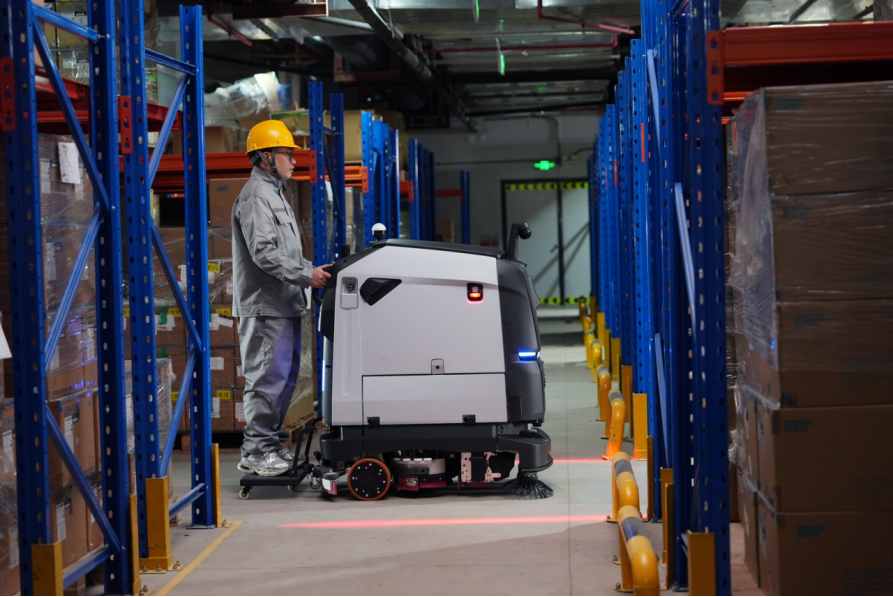
Figure 2 – Large scrubber-dryer robots are best evaluated against real route width, floor type, edge coverage, and maintenance workflow.
Five buying criteria that matter more than the AI label
1. Route fit
Ask vendors to prove the robot can operate on your real routes. That includes turning space, path clearance, ramps, thresholds, reflective surfaces, glass walls, high-traffic intersections, mats, and dock placement.
A demo on a clean open floor is useful only as a first look. The pilot should include the annoying parts of the building. If the robot cannot handle the spaces that consume supervisor time, the ROI model will look better on paper than in operations.
2. Cleaning performance
Facility teams should measure cleaning outcomes, not only square footage. A good evaluation includes soil removal, water recovery, dry time, streaking, edge cleaning, carpet performance, dust control, and consistency across shifts.
AI-native functions should connect to these outcomes. If the robot detects stubborn stains, does it increase cleaning intensity? If it sees a spill, does it change route behavior? If it has a heatmap, can supervisors use it to adjust schedules?
3. Human workflow
Robots work best when staff understand where they help. In schools, retail, healthcare, and public venues, the message should be straightforward: robots handle repetitive floor routes so people can focus on detailed work, occupant support, inspections, restrooms, touchpoints, and exceptions.
Facilities Management Advisor recommends defining the goal first, starting small, training staff, using data, and staying flexible. That is good advice because robotic cleaning changes routines. Supervisors need to know how the work is handed off before and after the robot runs.
4. Maintenance and service
Cleaning robots still need maintenance. Someone checks consumables, sensors, filters, brushes, squeegees, tanks, docking stations, and alerts. A vendor should explain daily, weekly, and monthly maintenance in plain language.
Service coverage matters as much as product capability. Ask who supports the robot locally, how fast parts arrive, what remote support can resolve, what requires an on-site technician, and what training is included. Multi-site buyers should also ask how the vendor handles fleet-level service across regions.
Pudu Robotics states that it has shipped more than 120,000 units globally and has a presence in more than 80 countries and regions. That scale is relevant to procurement because it points to product maturity, partner experience, and the practical need for support beyond the first sale.
5. Data and integration
Facility managers increasingly need proof of work. Coverage maps, task logs, hotspot maps, completion rates, and maintenance alerts help supervisors manage cleaning as an operating system rather than a checklist.
Ask what data the platform provides, who owns it, how long it is retained, whether dashboards can support multiple sites, and whether APIs or integrations are available. If the robot connects to elevators, gates, or facility systems, IT and building engineering should be involved before purchase approval.
How to run a serious pilot
A good pilot is not a demo with a longer calendar. It is a structured operating test.
Use a four-step pilot:
1. Baseline the current operation. Record the route, staff time, cleaning frequency, equipment used, complaints, inspection results, and known trouble spots.
2. Choose a focused use case. Start with one or two routes that matter and can be measured.
3. Define pass/fail criteria. Include coverage, cleaning quality, intervention rate, staff acceptance, uptime, maintenance time, and data usefulness.
4. Review the operating model. Decide who owns tasks, who reads reports, who handles exceptions, and what changes before rollout.
If the pilot only asks “Did the robot run?”, it will miss the real decision. The better question is “Did the robot improve the workflow enough that the team would choose to use it again next month?”
FAQ
What is an AI-native cleaning robot?
An AI-native cleaning robot uses AI-based perception and decision logic as part of its cleaning workflow. It may detect debris, stains, floor types, obstacles, cleaning outcomes, or component issues, then adjust cleaning actions or report results.
Do AI-native cleaning robots still need oversight?
They can support autonomous operation, but they still need human oversight. Staff should plan routes, maintain the machine, monitor reports, handle exceptions, and decide where the robot fits into the broader cleaning program.
What facilities are best suited for cleaning robots?
The best starting points are facilities with repetitive floor-care routes, measurable coverage needs, and enough area to justify deployment. Retail, warehouses, schools, hospitals, transport hubs, offices, hospitality spaces, and industrial sites can all be candidates when the route and floor type fit.
How should facility managers compare vendors?
Compare vendors by cleaning performance, route fit, AI capabilities, safety, data reporting, maintenance effort, service coverage, integration options, financing model, and proof from similar facilities.
The buyer takeaway
AI-native cleaning robots are worth evaluating when the facility has a clear cleaning job, a measurable route, and a team ready to manage the new workflow. The best buying process starts with the building, not the brochure.
For facility managers, the practical next step is simple: map the routes, list the floor types, define the proof you need, and ask vendors to demonstrate how their robot will handle the real site conditions. AI matters when it improves that operating reality.
References & Further Reading
1. International Federation of Robotics, World Robotics 2025 Service Robots. https://ifr.org/ifr-press-releases/news/service-robots-see-global-growth-boom
2. International Federation of Robotics, Top 5 Global Robotics Trends 2026. https://ifr.org/ifr-press-releases/news/top-5-global-robotics-trends-2026
3. ISSA, Going Mainstream. https://www.issa.com/articles/going-mainstream/
4. Facilities Dive, Don’t leave cleaning robots to their own devices. https://www.facilitiesdive.com/news/dont-leave-cleaning-robots-to-their-own-devices-manufacturer-says/753960/
5. Facilities Management Advisor, What Facility Teams Should Know About Making Cleaning Robots Work. https://facilitiesmanagementadvisor.com/maintenance-and-operations/what-facility-teams-should-know-about-making-cleaning-robots-work/
6. Pudu Robotics, Company. https://www.pudurobotics.com/en/company
7. Pudu Robotics, PUDU BG1 Series. https://www.pudurobotics.com/en/products/pudu-bg1-series
8. Pudu Robotics, PUDU CC1 Pro. https://www.pudurobotics.com/en/products/cc1-pro
9. Pudu Robotics, PUDU MT1. https://www.pudurobotics.com/en/products/mt1
10. Pudu Robotics, PUDU MT1 Vac. https://www.pudurobotics.com/en/products/mt1-vac
