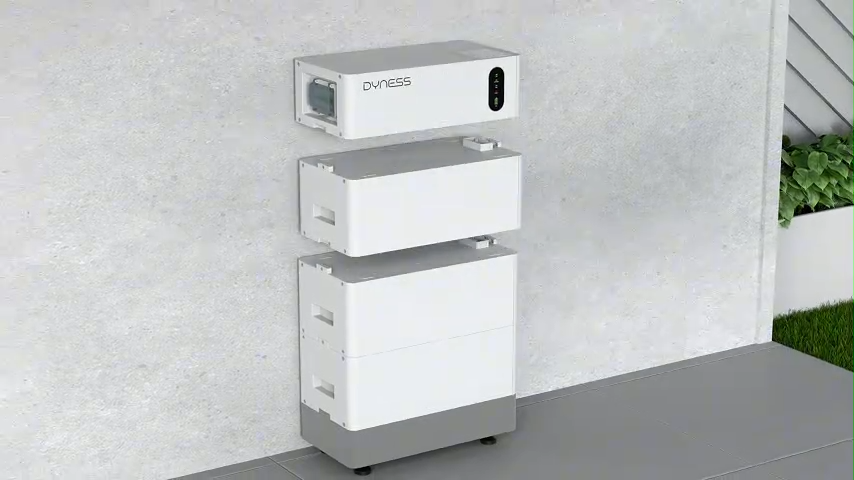
Modern residential engineering increasingly relies on advanced decentralized power architectures to counteract rising utility expenses and localized macro-grid distribution failures. Implementing a Stackable High Voltage LiFePO4 Home Battery System allows contemporary households to maximize rooftop photovoltaic utilization, manage shifting load spikes, and secure uninterrupted backup continuity.
Transitioning to elevated voltage topologies dictates a rigorous assessment of electrochemical storage parameters, physical scaling constraints, and data interconnection interfaces. Smart property developers prioritize integrated hardware layouts that function quietly behind the scenes while maintaining exceptional conversion ratios over decades.
The Structural Mechanics of High Voltage Domestic Microgrids
Modern households experience highly dynamic load variations as families add rapid electric vehicle chargers, smart heat pumps, and induction appliances. Low-voltage storage units often require thick distribution cables to handle large electricity transfers, creating excessive thermal friction across internal building circuits. High-voltage structures counteract this physical limitation by raising operating boundaries to lower system current levels substantially.
A well-configured High Voltage Home Battery Storage system minimizes baseline balance-of-plant wiring complexity for contracting teams during initial property layout planning. Lower current metrics reduce structural heat generation across the internal circuit boards, protecting core electrical components from early degradation. Streamlining these fundamental transmission paths optimizes local electricity distribution and provides a stable energy reserve foundation.
Overcoming Cross Generation Capacity Degradation Bottlenecks
Traditional multi-module arrays frequently encounter technical hurdles when trying to integrate newly manufactured battery units with existing, partially aged hardware blocks. Mismatched internal resistance profiles cause stronger modules to drain unevenly into weaker blocks, accelerating cell degradation across the entire system. Sophisticated chemical management is mandatory to protect long-term capacity investments from early failure.
The hardware solutions designed by Dyness incorporate a comprehensive three-year module compatibility support to protect expanding property investments. This advanced manufacturing framework allows local installers to mix newer and older storage components within a single array safely over extended timelines. Mitigating cross-generation imbalances reduces system upkeep costs and enables highly predictable energy retention profiles.
Evaluating Multi Cluster Parallel Scaling Boundaries
Large estate properties and shared domestic compounds frequently present extensive electrical load profiles that exceed the capability of a single battery column. Connecting multiple independent vertical structures into a synchronized network requires advanced parallel communication pathways and smart internal balancing software. Comprehensive physical scaling bridges the gap between standard modular assemblies and large-scale utility applications.
The flexible configuration architecture supports the deep parallel connection of up to 12 clusters simultaneously to satisfy heavy residential and small commercial requirements. Multi-cluster synchronization enables property managers to scale total local energy networks smoothly into massive independent power reserves. Deep expansion pathways safeguard initial capital deployments by supporting clean capacity upgrades whenever local load thresholds cross baseline limits.
Chemical Safety Parameters in High Current Residential Stacking
Dense electrochemical cell matrices situated near active family living zones demand an uncompromising commitment to strict safety standards and non-combustible material properties. Lithium iron phosphate formulations have established itself as the baseline standard for residential microgrids due to its superior molecular resilience. Strong covalent atomic bonds reduce rapid decomposition and oxygen release under high operating temperatures.
High-quality lithium iron phosphate chemistry enables localized backup blocks to preserve their material integrity through thousands of intense bidirectional charging cycles. Inherent chemical stability lowers long-term operational liabilities and protects surrounding facility equipment from unforeseen physical failures. Choosing secure base materials guarantees predictable electrical performance over multi-decade lifecycles.
Intelligent Thermal Synchronization Across Variable Environments
Unconditioned indoor mechanical rooms and outdoor utility footprints subject heavy energy storage hardware to extreme dust, high humidity, and severe winter freezes. Delicate internal electronic boards and dense cell groupings require robust external defense enclosures to reduce moisture ingress and short circuits. High-grade protection ratings isolate the inner cell modules from ambient weather stress.
Heavy-duty equipment incorporates industrial outdoor enclosures combined with smart heat dissipation technology to maintain optimal operating thresholds across varied geographic climates. Reducing localized hot spots within the cell matrix lowers component degradation and enables stable, safe operation year after year. Secure physical sealing guarantees that clean energy arrays deliver power through the harshest environmental constraints.
Universal Interoperability Frameworks with Global Inverters
Stationary storage components cannot operate isolated from localized power conversion infrastructure and building electrical sub-panels. When data communication protocols between a main battery management unit and external solar inverters become mismatched, tracking lag occurs, which lowers round-trip conversion efficiency. Achieving open cross-platform fluidity remains mandatory for rapid field setup.
Highly adaptive High Voltage Home Battery Storage system configurations utilize universal communication interfaces designed to synchronize with major global inverter brands. This fluid synchronization shortens field installation timelines and guarantees that incoming power is monitored and processed accurately. Smooth communication lines allow generation, storage, and conversion layers to perform flawlessly as a single system.
Conclusion
For homeowners, successfully deploying optimized residential microgrids depends on integrating high-voltage transmission efficiency, strong chemical safety, and flexible parallel scalability. An advanced Stackable High Voltage LiFePO4 Home Battery System delivers these capabilities, ensuring continuous backup power while keeping daily utility costs under control cleanly.
With adaptive platforms from Dyness offering flexible configurations that scale from 2 to 6 modules and up to 12 clusters with 3-year module compatibility, the brand delivers the durable, low-maintenance technology platforms required to achieve complete household energy independence.
