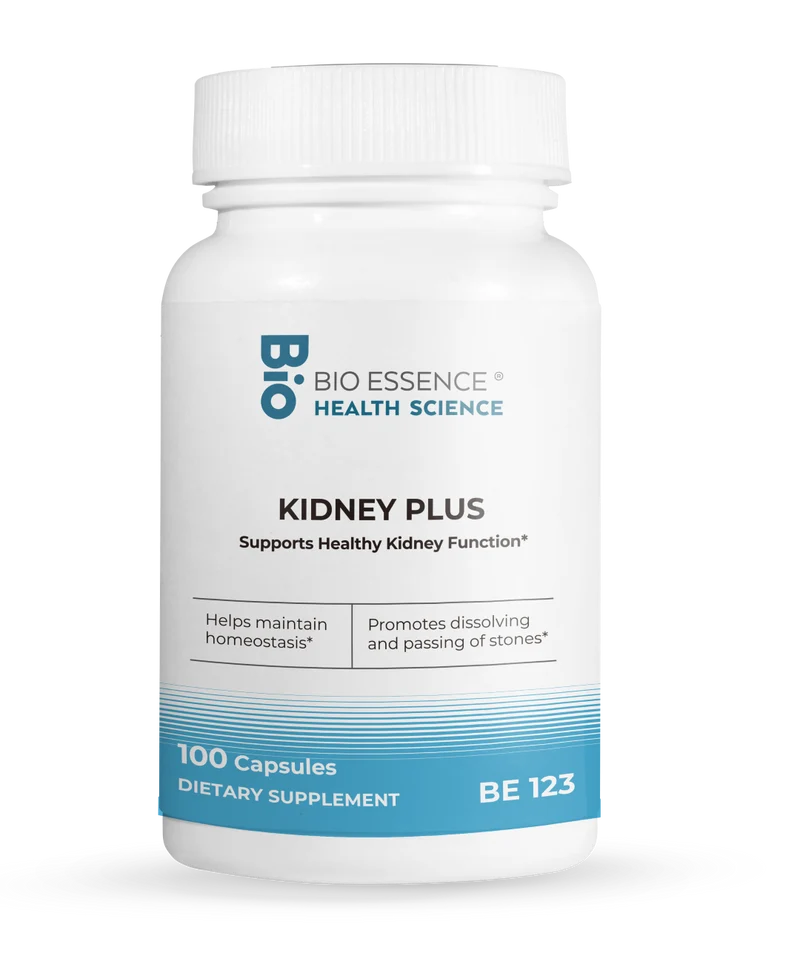
Kidney support formulas can contain a range of botanical ingredients selected according to traditional herbal principles and contemporary supplement formulation practices. For traditional Chinese medicine (TCM) practitioners, understanding these ingredients involves more than reading a product label. Their traditional properties, intended roles, preparation methods, and compatibility with other ingredients all contribute to how a formula is evaluated for professional use.
Whether reviewing an established herbal combination or exploring a natural kidney cleanse product, practitioners benefit from examining the complete ingredient profile rather than relying on broad marketing descriptions. Understanding what goes into Kidney Plus formulas can support more informed product selection and ingredient discussions with clients.
Common Ingredients in Kidney Support Formulas
Kidney Plus is a name that may be used for different supplement products, so the exact ingredients depend on the manufacturer’s formulation. There is no single universal ingredient list for every product carrying a kidney-support label. Practitioners should therefore consult the specific product label and official product information before drawing conclusions about its composition.
Some formulas draw on traditional Chinese herbs associated with Kidney patterns. Common examples include Shu Di Huang (Rehmannia root), Shan Zhu Yu (Cornus fruit), Shan Yao (Chinese yam), and Fu Ling (Poria). These herbs appear in established TCM formula traditions, although their inclusion and proportions vary between products.
Other botanical ingredients may be selected to complement a formula’s overall design. Their relevance depends on the intended formulation, traditional theory, preparation method, and the practitioner’s assessment. A familiar herb name alone does not establish that two products are equivalent or appropriate for the same application.
Understanding the Role of Individual Herbs
Each ingredient in a multi-herb formula contributes its own traditional properties and formulation considerations. Looking at herbs individually helps practitioners understand the reasoning behind a combination without losing sight of the formula as a whole.
Shu Di Huang is traditionally associated with nourishing Kidney yin and blood in TCM practice. It is commonly discussed in formulas designed around patterns involving deficiency. Its preparation differs from that of Sheng Di Huang, so practitioners should pay attention to the specific form listed on the label.
Shan Zhu Yu is traditionally used for its astringent properties and is associated with Liver and Kidney functions in Chinese medicine. Its presence in a formula may reflect a particular traditional formulation strategy rather than a general-purpose kidney support objective.
Shan Yao is traditionally associated with the Spleen, Lung, and Kidney meridians. It is often included in herbal combinations that consider digestive function alongside other traditional patterns. This broader role illustrates why a formula should be evaluated through its complete composition rather than one headline ingredient.
Fu Ling, also known as Poria, is traditionally associated with supporting fluid metabolism and strengthening the Spleen. It appears in many Chinese herbal combinations, but its presence does not mean that every product containing it has the same purpose or properties.
These examples illustrate common ingredients found in traditional Kidney-related formulas. They should not be interpreted as a confirmed ingredient list for every Kidney Plus product. The actual formulation must always be verified against the manufacturer’s documentation.
What to Check Beyond the Ingredient Names
A useful formula review considers several factors beyond the names of the herbs. First, check the botanical identity of each ingredient, including its accepted name and the plant part used. Similar common names can refer to different materials, and accurate identification is important for product comparison and quality assessment.
Second, examine the preparation method. Raw herbs, processed herbs, powders, extracts, granules, and capsules may differ in concentration, processing, and serving size. An extract ratio can provide useful context, but it should not be treated as a direct measure of clinical effectiveness or as proof that two products are interchangeable.
Third, review the quantity of each ingredient when that information is available. A long ingredient list does not necessarily indicate a better formula. The relative amounts, combination logic, and suitability for the intended professional context matter more than the number of listed botanicals.
Finally, check the product’s directions, warnings, storage instructions, and relevant quality documentation. Ingredient information should be clear enough to help practitioners assess what they are purchasing and explain the product’s composition accurately.
Evaluating Quality and Product Transparency
Ingredient quality is a practical concern for practitioners who purchase herbal products for ongoing professional use. Consistency in botanical sourcing, manufacturing processes, and finished-product testing can influence purchasing decisions. Clear documentation also makes it easier to compare products and identify information that requires clarification.
When assessing a supplier, consider whether it provides identifiable ingredient information, suitable handling and storage guidance, and accessible customer support. Depending on the product, relevant documentation may include identity testing, contaminant testing, manufacturing controls, and batch-related quality records.
Practitioners should also distinguish traditional descriptions from substantiated product claims. An herb’s historical use does not establish that a particular finished supplement has been clinically proven to produce a specific result. Kidney-related products should not be presented as substitutes for medical assessment or treatment of kidney disease.
For anyone exploring a natural kidney cleanse option, the most useful starting point is a transparent label and a clear understanding of the product’s intended use. Avoid assuming that terms such as “cleanse,” “detox,” or “support” demonstrate that a product removes toxins or improves kidney function. Such conclusions require appropriate evidence, not marketing terminology alone.
How Bio Essence Health Science Supports Practitioners
Choosing herbal products involves balancing traditional formulation knowledge with practical requirements such as ingredient identification, product consistency, and dependable supply. Bio Essence Health Science serves practitioners seeking herbal products and supplements for professional use, with a focus on traditional Chinese medicine and related product categories.
When reviewing its offerings, practitioners can examine individual product information and compare available formats before deciding whether a product fits their professional requirements. The company’s broader range includes single herbs, formula herbs, and other supplements, giving practitioners different product categories to explore according to their needs.
For Kidney Plus or any similarly positioned formula, the same evaluation process applies: confirm the exact ingredients, understand the preparation and serving information, and review relevant precautions. If a label does not provide enough detail to establish the composition, contacting the supplier for clarification is preferable to inferring ingredients from the product name.
Making an Informed Formula Choice
Understanding what’s inside a Kidney Plus formula begins with verifying the actual ingredient list. Traditional herbs such as Shu Di Huang, Shan Zhu Yu, Shan Yao, and Fu Ling provide useful examples of ingredients associated with Kidney-related TCM formulations, but they should not be assumed to appear in every product.
For practitioners, a careful review of botanical identity, preparation methods, ingredient quantities, quality information, and product-specific precautions offers a stronger basis for selection than broad claims alone. By combining traditional knowledge with transparent product documentation, practitioners can make more informed purchasing decisions and communicate ingredient information responsibly.
