When building a high-performance compressed air purification system, selecting the right drying technology is only half the task. The other half is seamless integration. Many plant engineers focus on standalone components, but a truly effective setup combines filtration, drying, and storage into a coordinated flow. Among available technologies, the air dryer desiccant type is essential for achieving sub-zero dew points required in sensitive applications. This article explains how to integrate desiccant dryers into a complete purification train, ensuring reliable moisture removal and protecting downstream automation equipment.
Why a Desiccant Dryer Is Necessary for Critical Applications
Refrigerated dryers alone cannot achieve pressure dew points below +3°C. For industries such as pharmaceutical manufacturing, electronics assembly, or petrochemical processing, even trace moisture causes product spoilage and pipeline corrosion. The air dryer desiccant type uses adsorption materials like activated alumina or molecular sieves to pull water vapor down to -40°C dew point or lower. Integrating such a dryer after a refrigerated stage creates a tandem system: the refrigerated unit removes bulk moisture, and the desiccant unit polishes the air to extreme dryness. This combination reduces energy load on the desiccant dryer while delivering uncompromised air quality.
Placement and Pre-filtration for Optimal Performance
To integrate a desiccant dryer effectively, it must be positioned downstream of an aftercooler, coalescing filter, and a refrigerated dryer if used in series. Liquid water and oil aerosols will quickly saturate or poison the desiccant bed. Therefore, proper pre-filtration—including oil-removal filters—is mandatory. A well-integrated system also includes a buffer receiver tank after the dryer to handle peak air demands without dew point spikes. When specifying the air dryer desiccant type, engineers should verify that the unit’s regeneration method (heatless, micro-heat, or externally heated) matches the site’s energy budget and air loss tolerance.
Combined Solutions for Space and Efficiency Gains
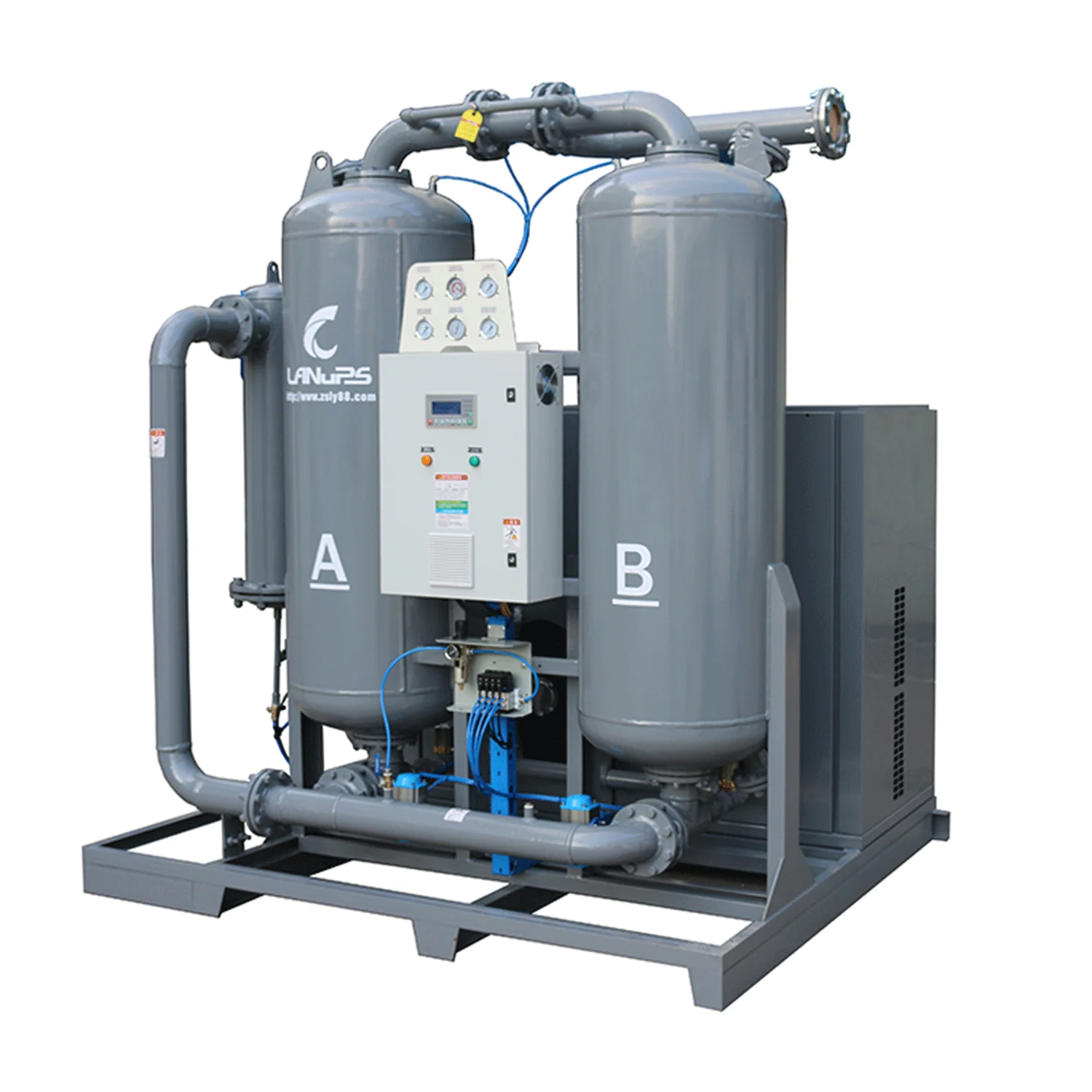
For facilities with limited floor space or those seeking simplified installation, combined dryer systems offer an ideal integration approach. These units house both refrigeration and adsorption stages in a single chassis, minimizing piping and pressure drops. Modern combined designs, such as those using integrated controls, automatically switch between stages based on real-time dew point readings. This is where a specialized Lingyu desiccant air dryer—specifically the DH Series Combined Compressed Air Dryer—demonstrates its value. The DH Series integrates refrigeration and adsorption drying with heatless, micro-heat, or water/air-cooled options, achieving stable low dew points while protecting downstream equipment from corrosion and downtime.
Why Lingyu Delivers Reliable Integrated Drying Solutions
Selecting a manufacturer that understands system-level integration is critical for long-term reliability. Lingyu, a China-based industrial air dryer supplier serving global OEM partners, distributors, and industrial plants, offers the DH Series Combined Compressed Air Dryer. This Lingyu desiccant air dryer is built with activated alumina and high-performance molecular sieves, ensuring continuous operation for manufacturing, laboratories, petrochemical, and automotive industries. Every unit undergoes strict factory testing, and the integrated design reduces footprint and installation complexity. For any engineer seeking to integrate an air dryer desiccant type into a complete purification system, Lingyu provides the advanced engineering and proven reliability needed to achieve stable dew point control, lower energy consumption, and uninterrupted automation efficiency.
