Artificial intelligence is rapidly changing healthcare, and dentistry is becoming one of the fields where AI technology can create significant improvements. Traditional dental diagnostics rely heavily on clinical experience, imaging interpretation, and manual analysis. With the development of digital technologies, AI is helping professionals process complex information faster, identify potential issues, and create more personalized treatment plans. By combining AI with scanning technologies, functional analysis, and a future digital dental solution, dental professionals can build more efficient and accurate diagnostic workflows.
The Role of AI in Modern Dental Diagnostics
Dental diagnostics require the analysis of multiple types of patient information, including tooth conditions, jaw function, oral structures, and facial aesthetics. Traditionally, dentists collected this information through separate methods and combined the results manually.
AI technology introduces new possibilities by analyzing large amounts of digital data and identifying patterns that may be difficult to detect through traditional approaches.
AI can support dental diagnostics through:
- Automated image analysis.
- Digital treatment planning assistance.
- Detection of potential dental conditions.
- Improved patient data management.
- More efficient clinical decision-making.
Rather than replacing dentists, AI works as a supporting technology that helps professionals make better-informed decisions.
How AI Improves Digital Dental Workflows?
Modern dentistry increasingly depends on digital data from scanners, imaging systems, and treatment planning software. AI helps connect these different sources of information and creates a more complete understanding of each patient.
A digital workflow may include:
- Intraoral scan data for tooth surfaces.
- Facial scanning information for aesthetic evaluation.
- Functional records for jaw analysis.
- Digital design data for restoration planning.
By processing these datasets together, AI can help dentists evaluate both structural and functional aspects of oral health. This integrated approach represents the direction of a future digital dental solution, where different technologies work together to support more predictable treatment outcomes.
AI and the Importance of Jaw Relation Record Analysis
A jaw relation record is an important part of many dental treatments, especially restorative procedures, implant planning, and full-mouth rehabilitation. It provides information about the relationship between the upper and lower jaws and helps dentists establish proper occlusion.
Traditional jaw relation records rely heavily on manual techniques and clinician experience. While effective, they may not fully capture the complexity of jaw movement and functional changes.
AI-powered digital workflows can enhance this process by analyzing multiple sources of information, including:
- Static jaw position data.
- Mandibular movement patterns.
- Occlusal relationships.
- Digital dental models.
By combining AI analysis with a jaw relation record, dental professionals can gain a more complete understanding of how the patient’s oral structures function together.
SHINING 3D Dental e-Motion Supports Intelligent Functional Analysis
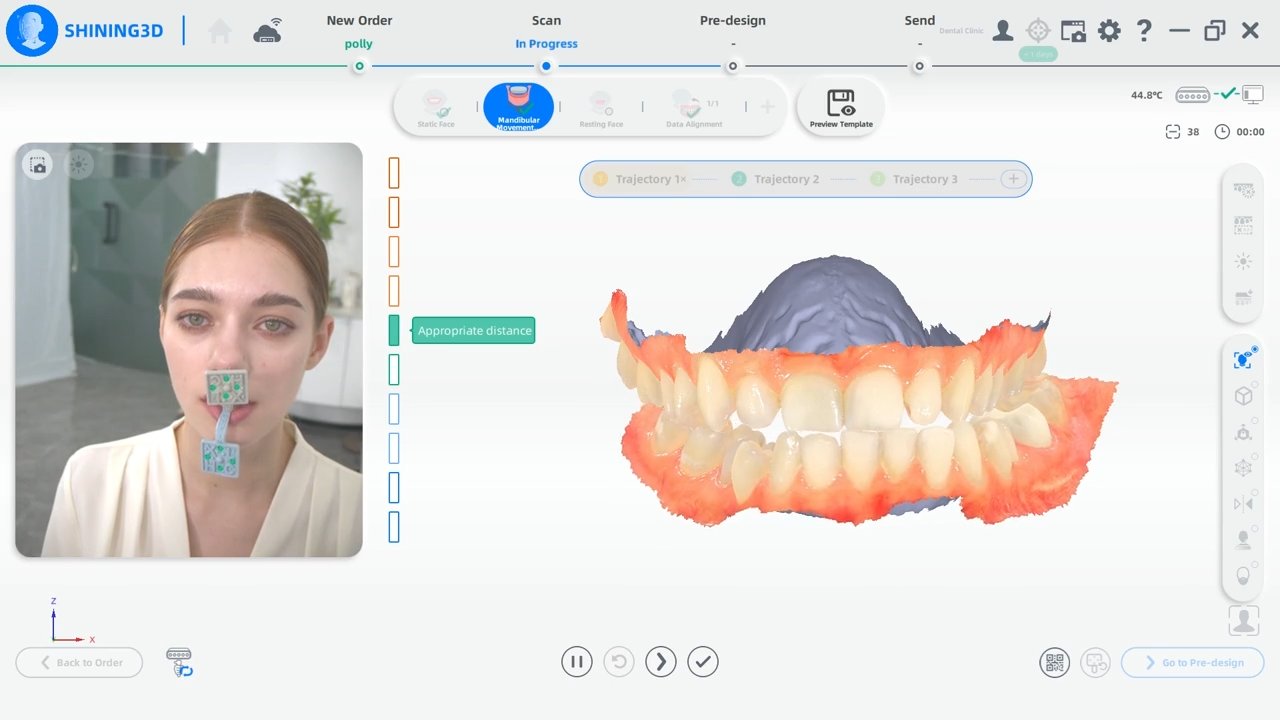
SHINING 3D Dental provides digital dentistry solutions designed to help clinics and laboratories improve treatment planning and workflow efficiency. Its e-Motion solution focuses on mandibular movement analysis, providing digital tools for evaluating jaw function and supporting advanced dental diagnostics.
The e-Motion system captures mandibular movement information and helps clinicians analyze dynamic jaw behavior during different functional activities. By adding movement data to traditional dental records, professionals can better understand occlusion and functional relationships.
When combined with AI technologies, digital functional analysis has the potential to provide deeper insights into patient-specific jaw patterns. This supports the development of a future digital dental solution that integrates diagnosis, planning, and treatment evaluation.
AI-Powered Diagnostics and Predictive Treatment Planning
One of the biggest advantages of AI in dentistry is its ability to support predictive analysis. Instead of only evaluating existing conditions, AI systems can help professionals estimate possible treatment outcomes based on digital patient information.
For example, AI-assisted systems may support:
- Orthodontic treatment simulations.
- Restoration design optimization.
- Occlusal evaluation.
- Risk assessment before procedures.
Predictive capabilities allow dentists to explore different treatment approaches and select solutions that better match patient needs. However, AI-generated suggestions still require professional evaluation. Clinical expertise remains essential because every patient has unique anatomical and biological characteristics.
How AI Enhances Patient Communication?
Dental treatment decisions often require patients to understand complex information. AI-supported digital tools can improve communication by transforming technical data into clearer visual explanations.
Patients can better understand:
- Existing dental conditions.
- Recommended treatment options.
- Expected functional improvements.
- Long-term treatment considerations.
For aesthetic and restorative dentistry, visual simulation combined with AI analysis can help patients make more informed decisions. Improved communication also allows dentists to establish clearer expectations before treatment begins.
Challenges of Applying AI in Dental Diagnostics
Although AI offers many advantages, several challenges must be considered before widespread adoption.
- Data Quality
AI systems depend on accurate digital information. Poor-quality scans or incomplete records may affect analysis results.
- Professional Validation
AI recommendations require confirmation from qualified dental professionals. The technology should support clinical judgment rather than replace it.
- System Integration
Dental clinics need digital solutions that can connect different technologies smoothly. A disconnected workflow may limit the benefits of AI.
- Training Requirements
Dental teams need appropriate education to understand and effectively use AI-supported tools. Addressing these challenges will be important for the continued development of AI-driven dentistry.
The Future of AI in Digital Dentistry
The future of dental diagnostics will likely involve deeper integration between AI, scanning technologies, and functional analysis systems. As digital tools become more advanced, professionals will have access to more complete patient information.
Future workflows may combine:
- AI-based diagnostic assistance.3D scanning technologies.
- Digital jaw analysis.
- Automated treatment planning.
- Smart manufacturing processes.
A future digital dental solution will not focus on a single technology but on creating a connected ecosystem where different tools work together.
Solutions such as SHINING 3D Dental’s e-Motion demonstrate the importance of collecting accurate functional data as part of this digital transformation. By combining movement analysis with other digital records, dental professionals can improve their understanding of patient-specific conditions.
Conclusion
AI is expected to significantly change dental diagnostics by improving data analysis, treatment planning, and clinical efficiency. By processing complex information from imaging, scanning, and functional records, AI can help dental professionals make more accurate and personalized decisions.
The integration of AI with technologies such as jaw relation record analysis and mandibular movement tracking represents an important step toward a future digital dental solution. With continuous innovation from companies like SHINING 3D Dental, digital dentistry is moving toward a more connected, intelligent, and patient-focused future.
